Finding Quincy Residents
Quincy resident research works best as a short chain rather than one broad name search. Start with an address. That points to the assessed parcel. A recorded deed then confirms the transfer and its parties. A court entry, historical directory, or obituary can test the same person. It shows whether they belong to the right time and place. The City of Quincy assessment card identifies an owner and parcel facts. But a tax mailing address is not proof of residence. A historical directory is a dated snapshot too, not a complete household list.
Take one fact from each source to make the match. Write down the spelling used. Record the date searched. Note whether the result is current, historical, or only inference. That small discipline prevents a common Quincy error. It stops you from joining people just because a surname and city match. Street-level parcel and deed work continues in the Quincy street directory.
- Search the Quincy assessor by address or owner, then note the situs, owner spelling, MBLU or PID, and deed reference.
- Check the Norfolk Registry under the owner name and verify the legal description, recorded land, and Land Court paths.
- For a named voter, use the state form only with that person’s first name, last name, date of birth, and residential ZIP.
- For an earlier household, compare a Quincy directory or voting list with a nearby census year and local newspaper results.
- When an existing record is not online, ask the named custodian for the record type and a narrow date range under the Massachusetts Public Records Law.
Quincy Resident Records Offices
Three offices anchor the Quincy resident records trail. The assessor supplies the active parcel card. The Norfolk Registry stores the recorded ownership trail. State election staff provide an individual registration-status check rather than a browseable local roll. Each source answers a different question, so keep every result labeled. A registry deed proves a recorded land transaction, not who occupied a home on every date. The assessor names the assessed owner rather than all people at the situs.
Massachusetts Voter Status
Statewide individual check
Quincy, MA ZIP required
First name, last name, date of birth
Quincy Assessor Resident Clues
The Quincy Property Record Viewer is the strongest first stop. It works once a street address or owner name is known. Its search screen accepts address, owner name, MBLU, account number, or PID. The card that comes back can identify the assessed owner, situs address, tax-roll mailing address, value, and exemption information. It also shows physical characteristics and a deed reference. Keep the situs and mailing fields separate in your notes. A mailing address can belong to a representative, a business, or a second property. It can also reflect another arrangement rather than the person at the Quincy parcel.
| Quincy assessor field | Search use | Result to preserve |
|---|---|---|
| Address | Begin with the current situs and alternate street abbreviations. | Parcel card and displayed address. |
| Owner name | Test surname variants and possible multiple parcels. | Exact owner spelling. |
| MBLU or PID | Return to a selected parcel from the map. | Stable parcel identifier. |
| Account number | Locate a known assessment account. | Assessment record context. |
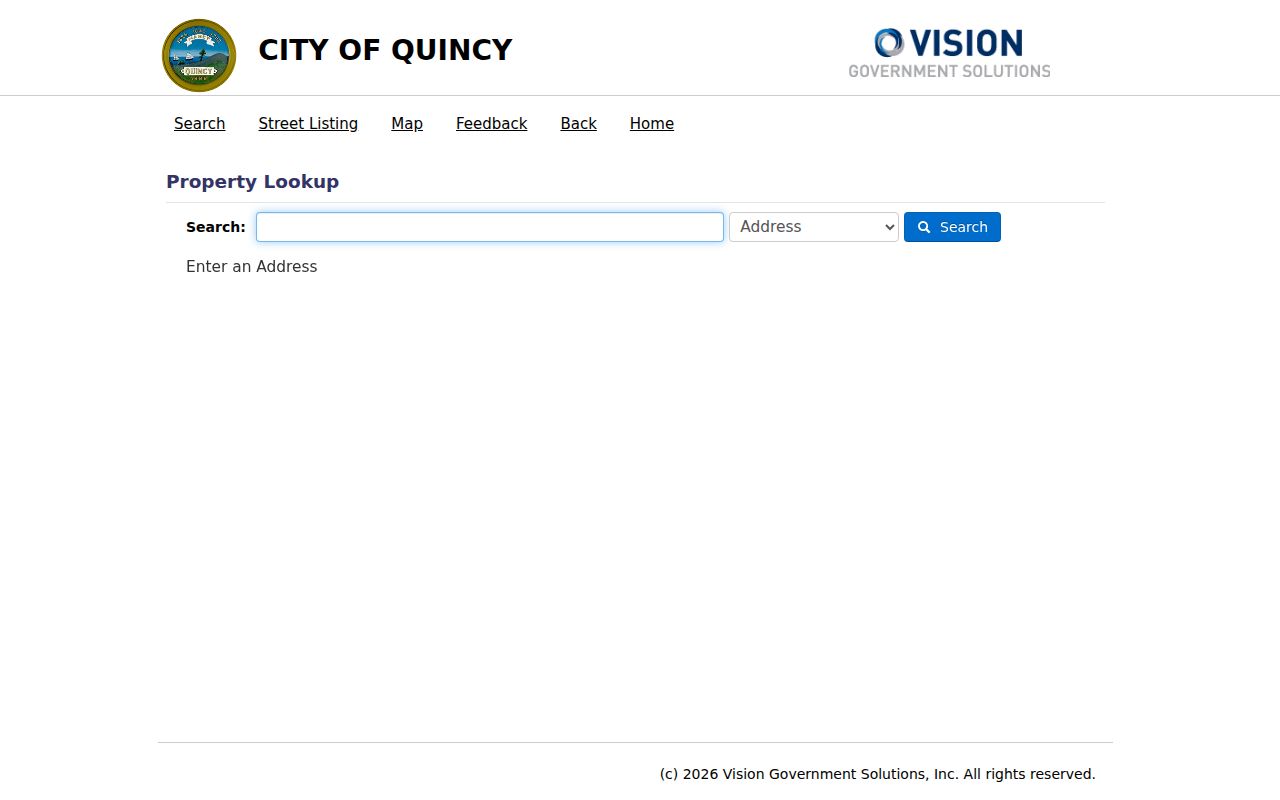
The assessor reports data covering roughly 27,000 parcels. A later inspection update can help date a card, but it is not a transfer record. The property-search screen shows the form that opens this Quincy residents directory workflow.
The Quincy assessor property-search page shows the local address, owner, MBLU, account, and PID paths.
Quincy MapGeo Parcel Records
Quincy's MapGeo property viewer adds the map context a text result cannot. Search by address, parcel number, or MBLU. Or pan to a block and click a parcel. Available layers help distinguish parcel shape, streets, zoning, flood context, and adjoining parcels. The map earns its keep in tricky cases. A corner lot, condominium layout, or neighboring parcel could otherwise be confused with the Quincy resident record you actually want.
A map selection still needs a record check. Note the selected parcel identifier, then open its assessor card and follow the deed reference. MassGIS also documents adjacent-parcel highlighting and measurement tools there. The map describes location and relationship. The deed's legal description remains the stronger test whenever a visual boundary and a title record seem to diverge.
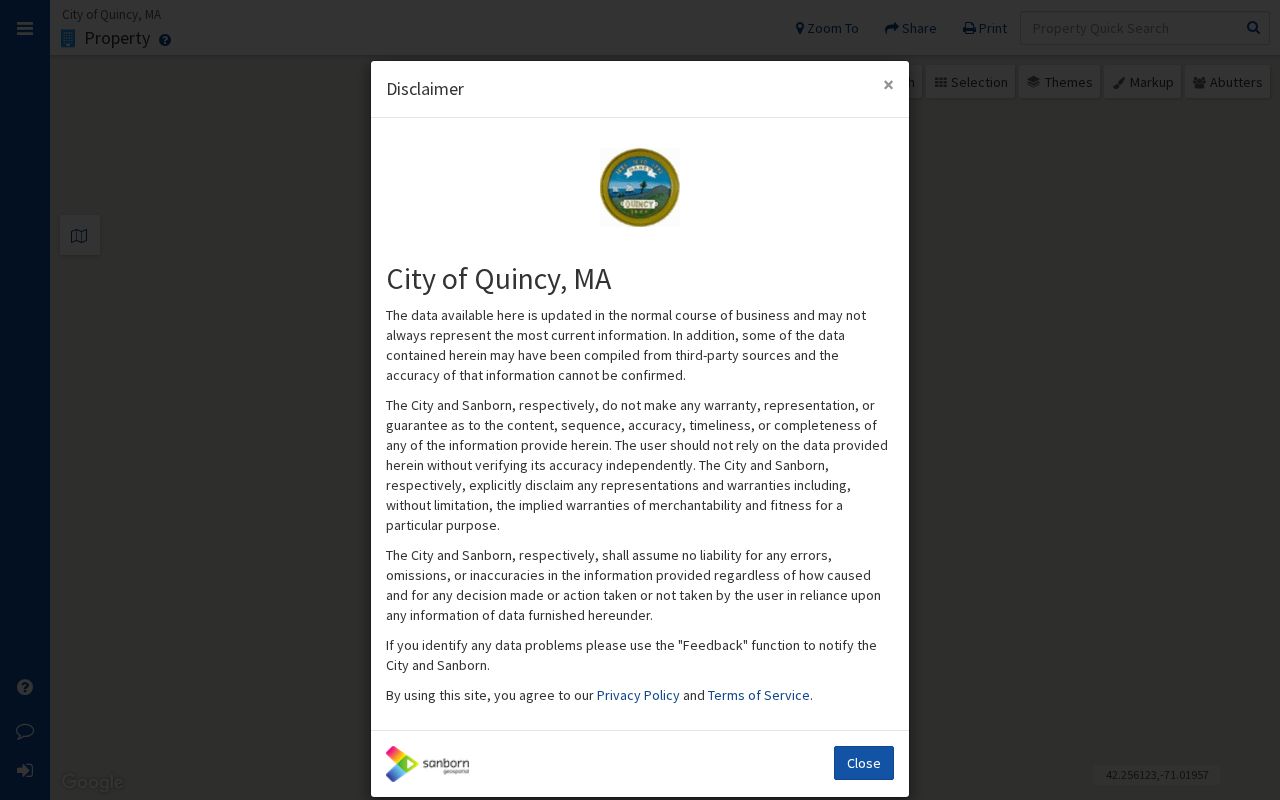
Quincy MapGeo’s parcel dataset supplies the street-level map view.
Quincy Registry Name Chains
The Norfolk Registry's public research system reaches back to 1793 for recorded land. Scanned grantor and grantee index pages cover 1793 through 1955. It offers separate Recorded Land and Land Court paths. Start with the assessor's current owner and deed reference. Search that owner as grantee. Read the grantor and legal description, then search the grantor as the next historical grantee. Before 2003, address searching is limited. The name and book-and-page method usually beats repeating an old street string.
Free access permits viewing and printing images marked "Not An Official Copy." When a certified or regular copy is needed, the Registry offers counter and mail routes. A title question may still require the physical certificate. The online Land Court owner listing is described as unverified. Remember this is a records trail, not an occupancy roll. Title, mailing address, and household presence are separate facts.
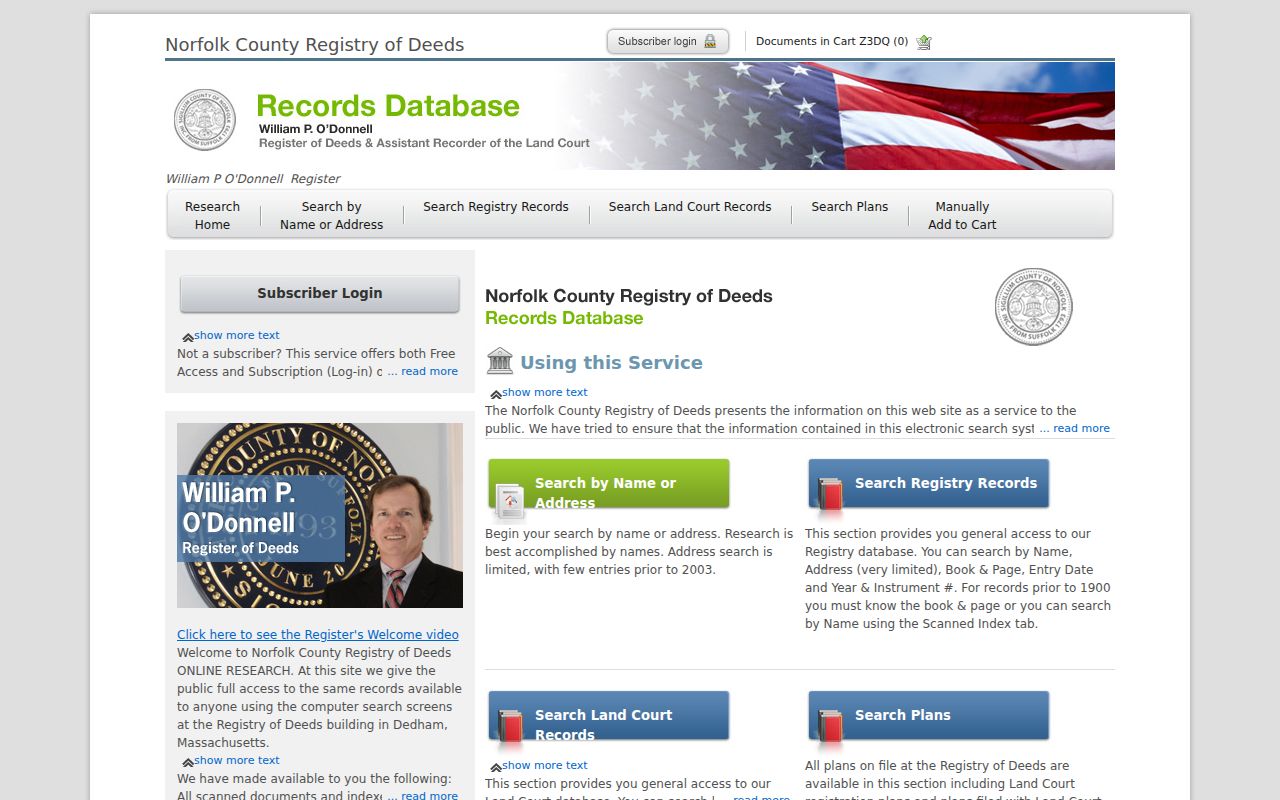
The Norfolk Registry research system presents Registry, Land Court, plan, and search choices.
Quincy Voter Lookup Limits
The Massachusetts voter-status form checks one person. It is no Quincy residents directory by street. You supply a first name, a last name, a date of birth, a five-digit residential ZIP, and an agreement checkbox. Massachusetts General Laws c. 51, § 47C protects the names and addresses in the central registry. A block-wide list is not possible. Protected registrations may be masked as well.
Historical lists fill part of the gap. Thomas Crane and state collections hold dated adult-inhabitant, voting, and resident lists. A volume can show that an adult appeared at an address in its publication year. It will not name everyone in the home, so treat a voter-status match and a historical list as different kinds of evidence.
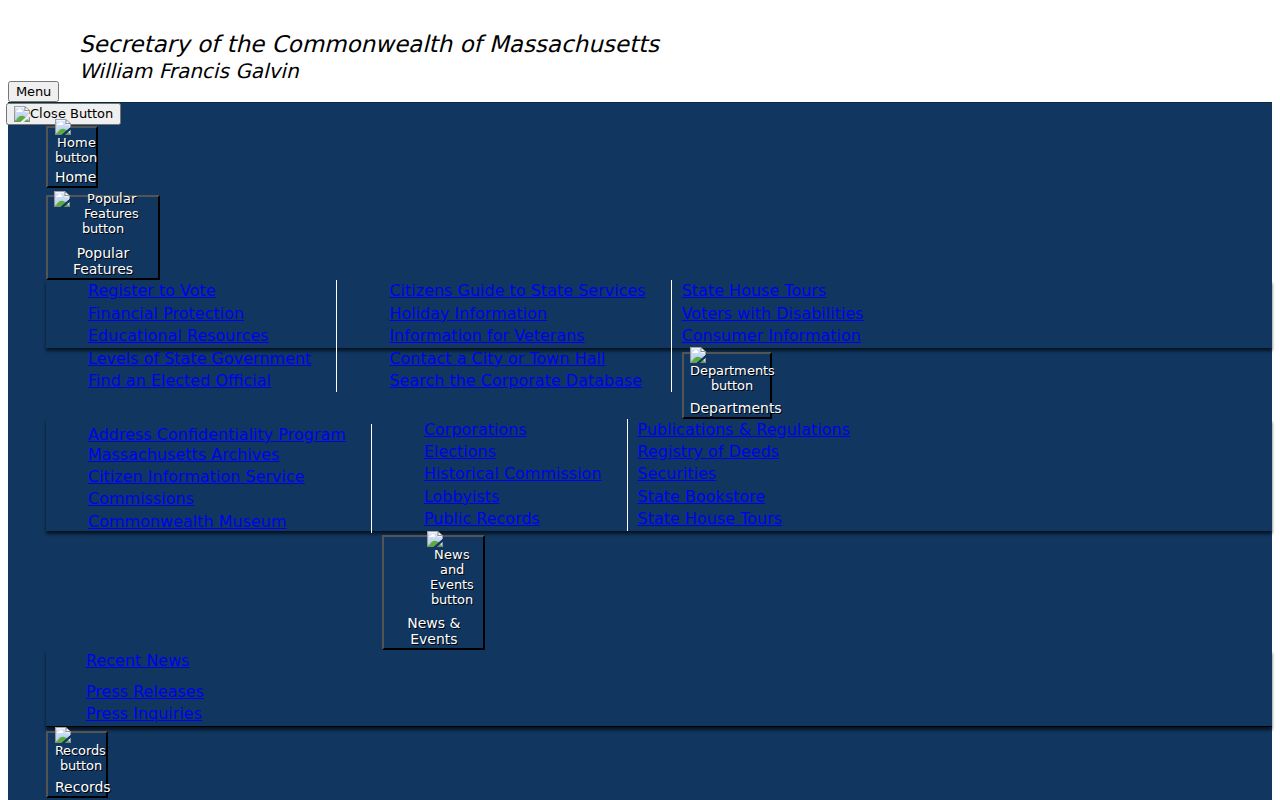
Massachusetts voter registration status shows the exact matching fields.
Current Quincy Resident Directories
No single official source lists every current Quincy resident. The practical layer is source-specific indexes. The assessor shows an assessed owner and parcel. The Registry lists parties to recorded instruments. The voter form confirms one supplied identity, public court dockets show case information subject to sealing and impoundment, and community associations offer contacts and events rather than a verified public roster. Match the source to the question.
| Quincy directory source | What it identifies | Custodian | Access route |
|---|---|---|---|
| Assessor parcel card | Assessed owner, situs, tax mailing field, parcel traits | Quincy Assessors | Free VGSI and MapGeo search |
| Land-record index | Grantors, grantees, instruments, legal descriptions | Norfolk Registry | Free research system and counter |
| Voter status | One supplied registration match | Secretary of the Commonwealth | Name, DOB, and residential ZIP |
| Public court docket | Parties, case events, disposition as available | Massachusetts Trial Court | Portal, clerk, and public kiosk |
| Local history collections | Dated household, newspaper, yearbook, and obituary leads | Thomas Crane Public Library | In-library and appointment routes |
Verifying one person differs from exploring a parcel. Compare two independent records. Keep each source's access limits in view, and let a narrower name-led lookup use the same two-source check.
Quincy Court Record Leads
MassCourts gives a public starting point for Quincy District Court, Norfolk Probate and Family Court, Norfolk Superior Court, the Quincy Session of Juvenile Court, and other Trial Court matters serving Quincy. Court records can separate people who share a name. A case number, party role, event date, or court location does the work. The portal does not replace the clerk's file. Sealed, impounded, juvenile, adoption, and other protected material is excluded or limited, and a public kiosk or counter may be the fallback for a record not visible online.
A docket is an index of case activity. It shows parties, case type, events, and disposition. The certified document may still need a clerk request. Confirm any name match carefully. An address-era record such as a deed, directory, or lawful vital-record route anchors the match.
Massachusetts Trial Court Case Access is the public court-search entry point.
Quincy Vital Record Routes
For a Quincy birth, marriage, or death, start local. The Quincy City Clerk or local registrar can say whether it holds the event and what identification or relationship proof is required. Massachusetts RVRS offers statewide certified copies. The State Archives holds genealogical records from 1841 through 1935, while RVRS covers 1936 to the present. RVRS publishes no public online index. The right route depends on the need.
Legal copy and genealogy open different doors. Massachusetts General Laws c. 46 governs access. Birth and marriage records older than 90 years, and death records older than 50, sit outside the ordinary confidential period. More recent certified copies carry relationship, tangible-interest, judicial-order, or official-duty rules. RVRS lists counter, mail, online, and phone channels, with different charges and processing times.
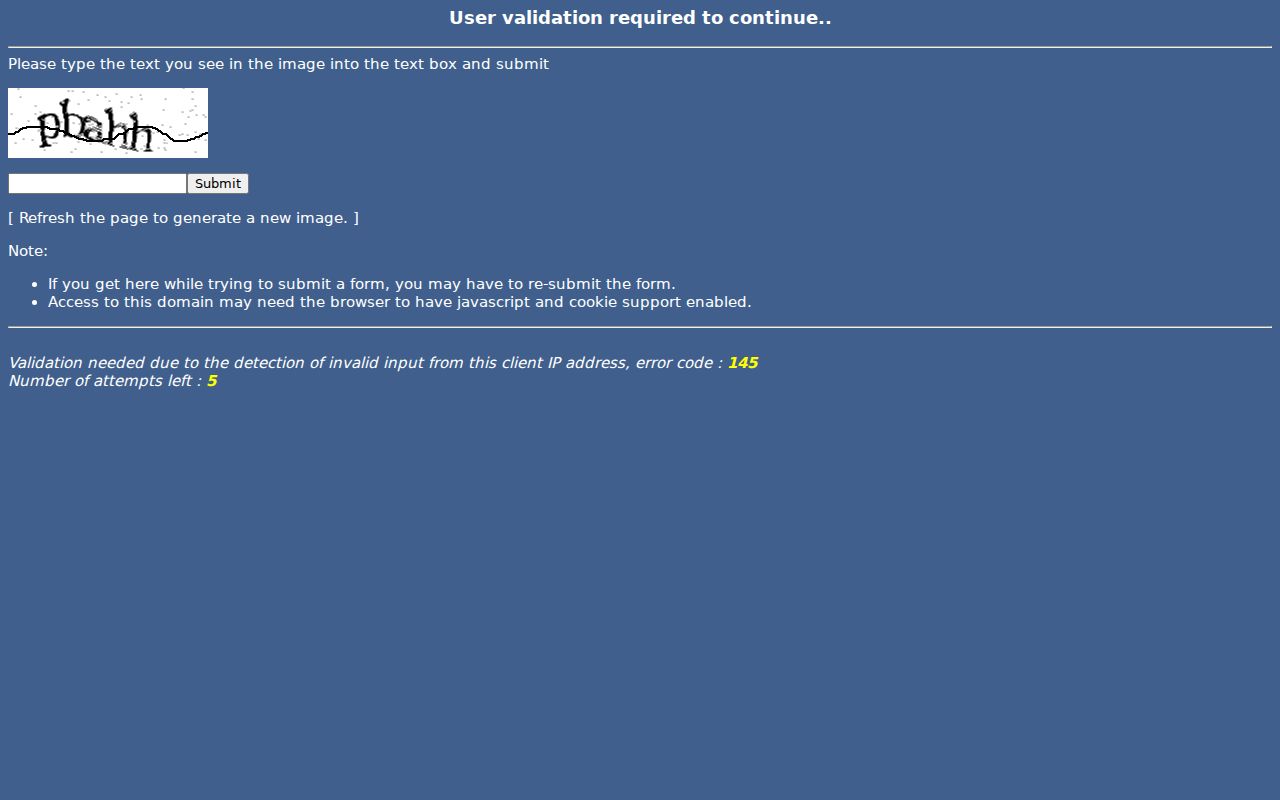
Massachusetts vital-record ordering guidance explains the available request channels.
Quincy ZIP Record Context
Quincy's primary ZIP codes are 02169, 02170, and 02171. They are delivery areas, not neighborhood or city-limit lines. USPS should verify an exact address, while MapGeo and the assessor help locate the parcel. A city directory may instead use an older street form, a ward, or neighborhood wording such as Quincy Centre, Houghs Neck, or Squantum. Keep both the old label and the postal result. Never force one into the other.
The assessor viewer does not expose a ZIP-wide export in the accessible search screen. For a grouped task, validate each address through USPS first. Then work the resulting parcel set. The voter-status form takes a ZIP only as one field for a named person. It gives no ZIP-wide voter list. More detailed postal geography appears in the Quincy ZIP code directory.
Note: Nearby Braintree, Milton, or Weymouth ZIPs can appear in a Quincy-area data set, so postal proximity alone does not establish a Quincy parcel.
Quincy Library Resident Archives
Thomas Crane Public Library is the local fallback. The Archives & Special Collections takes over from there. Quincy Room materials sit in the Richardson Building and are open for in-library use. Special collections are closed stacks and appointment-only. Staff hold a photo ID during use and allow photos subject to copyright. Copying is decided case by case. The library's databases add local newspapers, genealogy services, yearbooks, directories, voting lists, and photographs, with research assistance and obituary requests available by email or telephone.
- Roll
- A source-specific list, such as a voter or assessment roll, with its own inclusion rules.
- Index
- A finding tool that points to a record, not necessarily the record image or a complete history.
- Parcel
- A defined piece of land in the assessor and map systems, commonly identified by MBLU or PID.
- Criss-cross directory
- A reverse or house-guide section that moves from street and number to a listed householder.
The library's Patriot Ledger resources run from microfilm begun in 1837 to current holdings. Digitized Quincy titles include the Quincy Patriot, Quincy Monitor, and Quincy Daily Ledger. A move, death, business affiliation, or spelling change often escapes a parcel card. Dated news explains what the card cannot.
Quincy Official Directory Choices
A public custodian works slower than a data broker. That tradeoff buys you something real. The record states its keeper, its scope, and its limits. A commercial compilation, by contrast, can blend two people with similar names, hang onto a stale address, or attach an inferred link with no explanation of where it came from. So the honest comparison for a Quincy residents directory search is not fast against slow. It is an unaudited claim against a record you can trace back to the office that holds it.
| Source type | Strength | Limit to keep visible |
|---|---|---|
| Assessor and Registry | Direct parcel and recorded-title evidence | Does not enumerate every household member. |
| Library directories and newspapers | Dated household and community context | May omit people and have coverage gaps. |
| Court or vital record route | Defined event or case evidence | Access is subject to legal exclusions and eligibility. |
| Commercial data-broker category | May surface a lead to test | Can be stale, merged, and unaudited. |
Massachusetts builds the request path into M.G.L. c. 66, § 10. That statute covers records that already exist. Name the custodian, the record type, the date range, and how you want delivery. Keep in mind the law cannot force an office to build a fresh current-resident list or hand over protected material.
Historical Quincy Resident Directories
Quincy's printed directory record runs remarkably deep. The sequence includes Gibson and Morrison volumes from 1855 through 1866. Root's series follows from 1868 through 1874. Later runs cover adult-inhabitant and voting lists, plus selected house-guide directories. The State Library, Thomas Crane, catalog partners, and historical sources each supply a piece. One volume missing does not prove anyone left Quincy. It is simply a collection gap.
Start with the title page and the abbreviation key. An alphabetical entry may carry a name, a residence, and a trade. It can also hold a spouse notation or a separate business address. The reverse section works the other direction. It leads from a street number to its listed householder. Pair neighboring directory years with census schedules, deeds, obituaries, and probate records before assuming anyone stayed put. The full collection and shelf workflow sits on the Quincy city directory page.
Quincy Resident Record Gaps
Some gaps matter because they change your next move. Quincy publishes no public cemetery-interment database. The city offers no authenticated public search for permits or code cases. Norfolk County posts no public jail roster. No citywide Quincy renumbering year is on record. A missing interface does not mean the record never existed. It means your fallback should be a narrow request, a counter visit, or an archival inquiry rather than an invented online search.
For a city record with no index, ask the custodian directly for the record type. Add an address or date range to the request. Older house history rewards layering: the assessor card, MapGeo geometry, Registry and Land Court records, a directory or house guide, a Sanborn map, and a newspaper or probate lead. That Quincy trail leaves uncertainty intact wherever the source itself gives no answer.
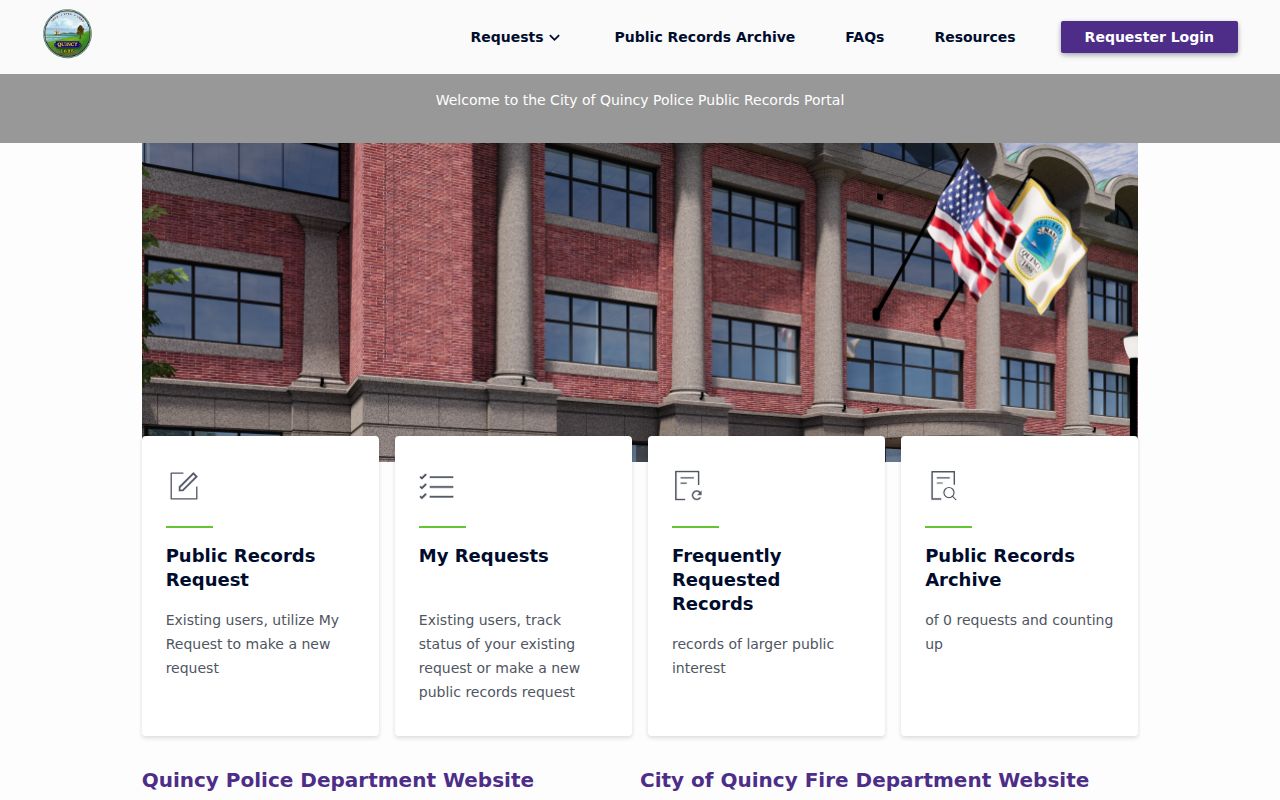
Quincy Police’s public-records portal illustrates the city’s request-and-tracking route for an existing record.
Another office may hold the record you need. Send the request there, and include the source details you already have.
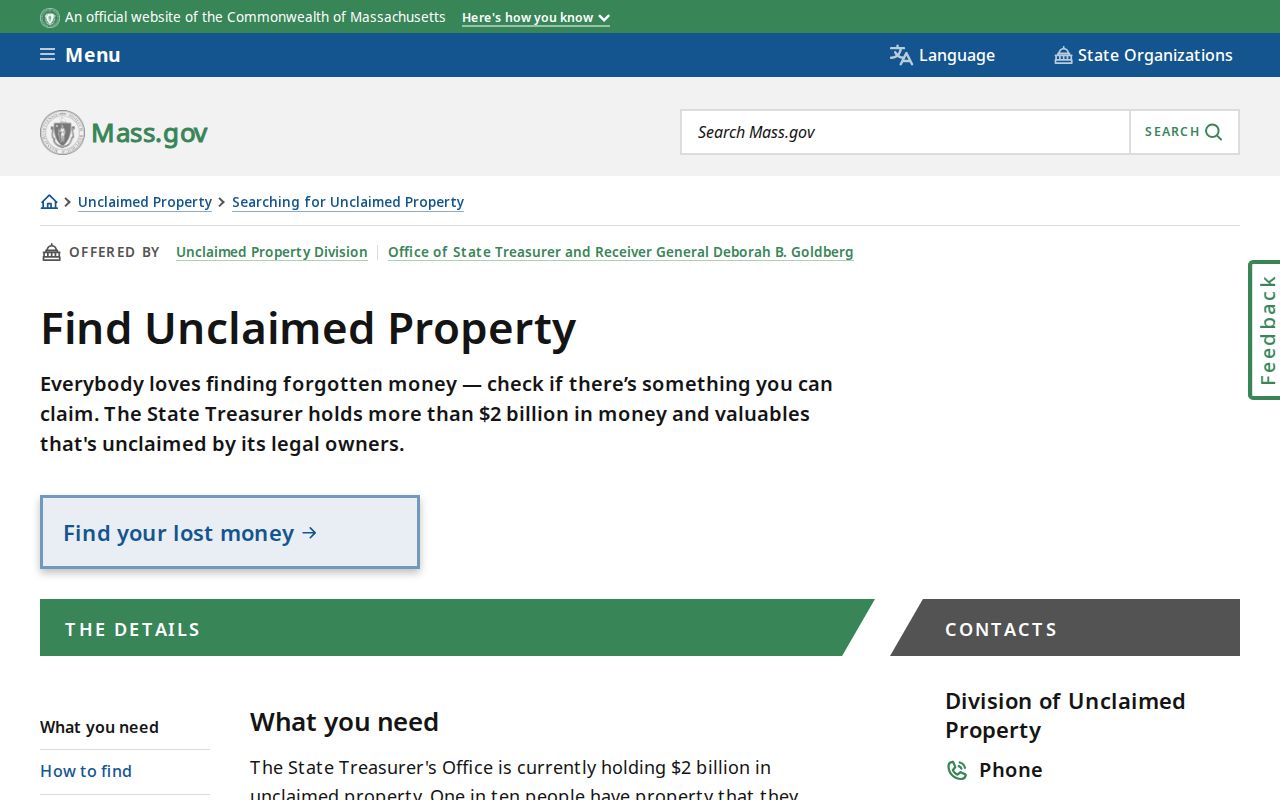
Massachusetts unclaimed-property search guidance is a name-and-address route that may supply a former-address or heir lead.
A government result without a date or source detail is only a clue. Preserve that uncertainty instead of attaching the result to a Quincy household.
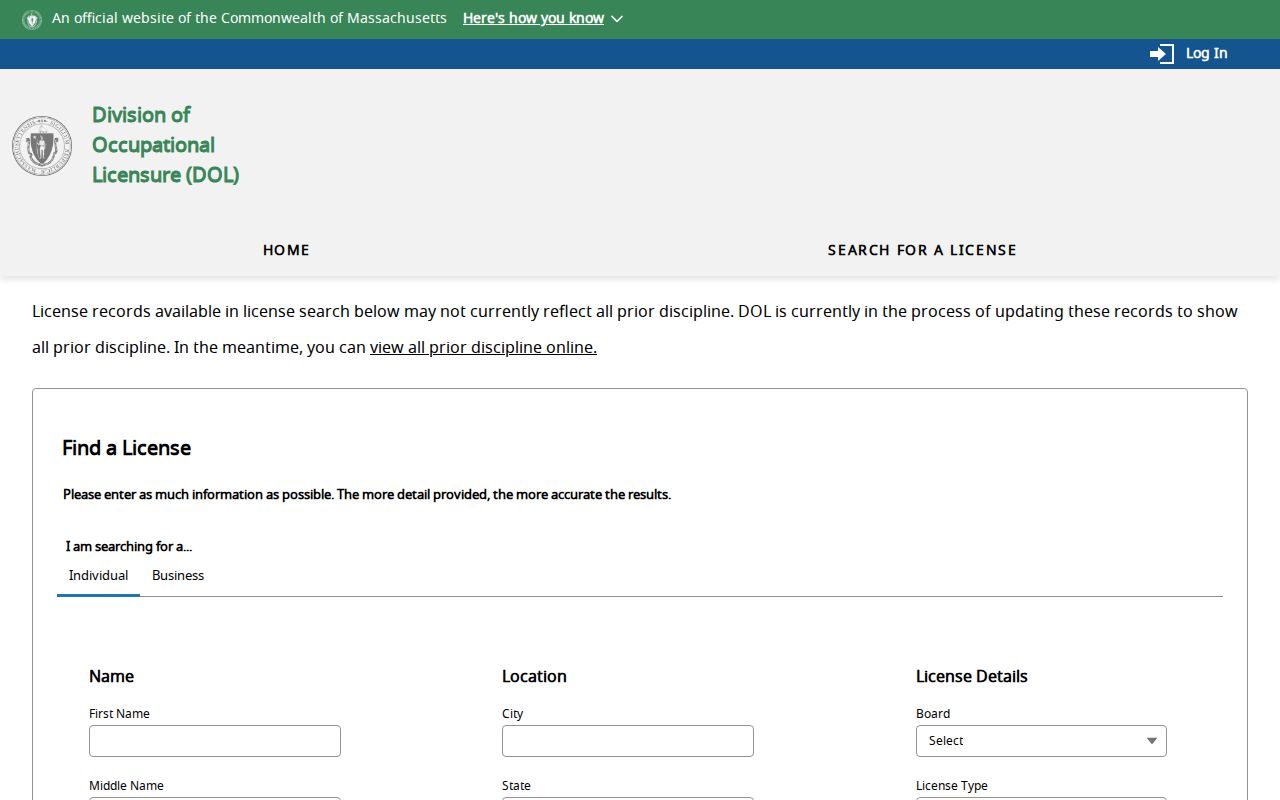
Massachusetts license search offers name, city, state, ZIP, board, type, and number fields.