Finding Quincy Residents
Quincy resident research works best as a short chain, not a broad name search. An address points first to the assessed parcel. A recorded deed confirms a transfer and its parties. A court entry, historical directory, or obituary can then test whether the same person belongs to the right time and place. The City of Quincy assessment card identifies an owner and parcel facts, but a tax mailing address is not proof that a person lives at the property. Likewise, a historical directory is a dated snapshot, not a complete household list.
Use one fact from each source to make a match. Record the spelling used, the date searched, and whether the result is current, historical, or only an inference. That small discipline prevents a common Quincy error, joining people merely because a surname and city match. For street-level work, the parcel and deed sequence is handled in the Quincy street directory.
- Search the Quincy assessor by address or owner, then note the situs, owner spelling, MBLU or PID, and deed reference.
- Check the Norfolk Registry under the owner name and verify the legal description, recorded land, and Land Court paths.
- For a named voter, use the state form only with that person’s first name, last name, date of birth, and residential ZIP.
- For an earlier household, compare a Quincy directory or voting list with a nearby census year and local newspaper results.
- When an existing record is not online, ask the named custodian for the record type and a narrow date range under the Massachusetts Public Records Law.
Quincy Resident Records Offices
Three offices provide the core Quincy resident records trail. The assessor supplies the active parcel card. The Norfolk Registry stores the recorded ownership trail. State election staff provide an individual registration-status check, not a browseable local roll. Each source answers a different question, so a result should retain its own label. The registry proves a recorded land transaction; it does not establish who occupied a home on every date. The assessor identifies the assessed owner, not all people at the situs.
Massachusetts Voter Status
Statewide individual check
Quincy, MA ZIP required
First name, last name, date of birth
Quincy Assessor Resident Clues
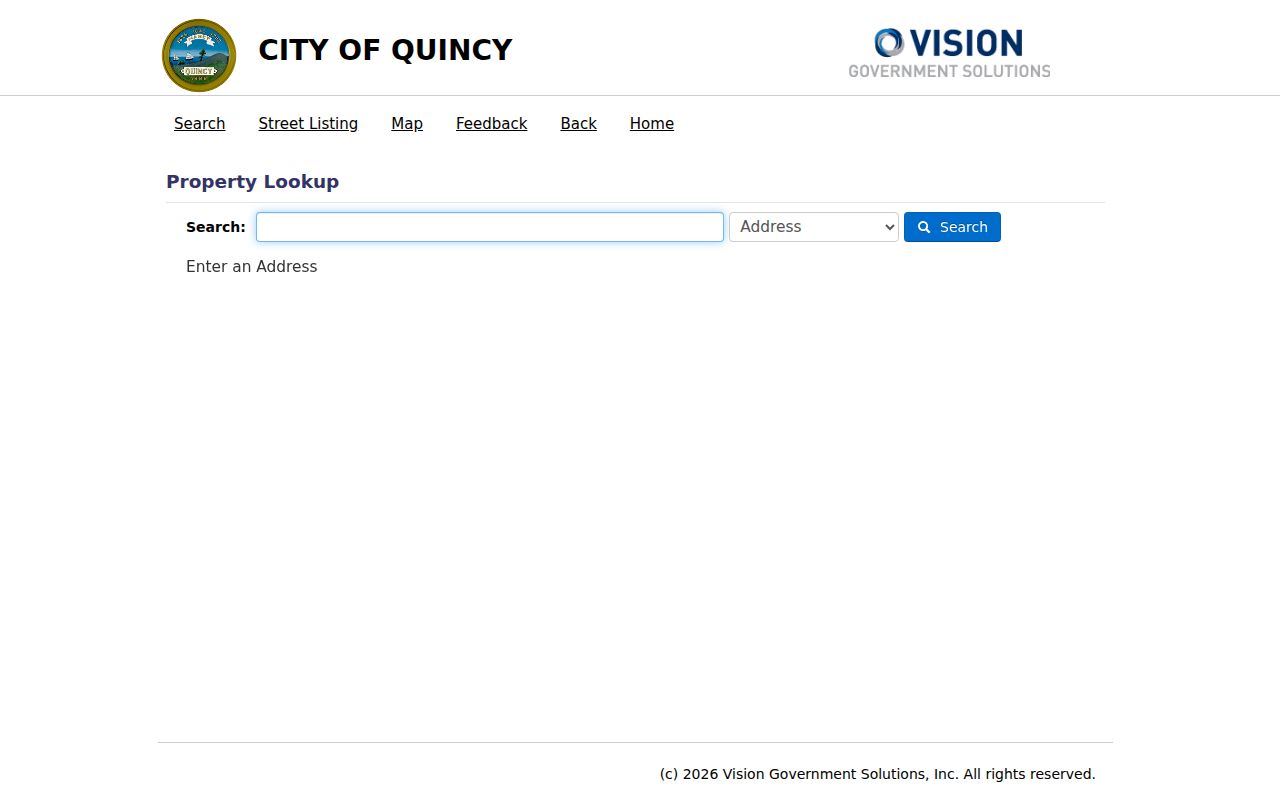
The Quincy Property Record Viewer is the strongest first stop when a street address or owner name is already known. Its search screen accepts address, owner name, MBLU, account number, or PID. The resulting card can identify the assessed owner, situs address, tax-roll mailing address, value, exemption information, physical characteristics, and a deed reference. Keep the situs and mailing fields separate in notes. A mailing address can belong to a representative, a business, a second property, or another arrangement rather than the person at the Quincy parcel.
| Quincy assessor field | Search use | Result to preserve |
|---|---|---|
| Address | Begin with the current situs and alternate street abbreviations. | Parcel card and displayed address. |
| Owner name | Test surname variants and possible multiple parcels. | Exact owner spelling. |
| MBLU or PID | Return to a selected parcel from the map. | Stable parcel identifier. |
| Account number | Locate a known assessment account. | Assessment record context. |
The assessor says its data covers roughly 27,000 parcels. A later inspection update can help date a card, but it is not a transfer record. The property-search screen shows the form used for the first part of this Quincy residents directory workflow.
The Quincy assessor property-search page shows the local address, owner, MBLU, account, and PID paths.
Quincy MapGeo Parcel Records
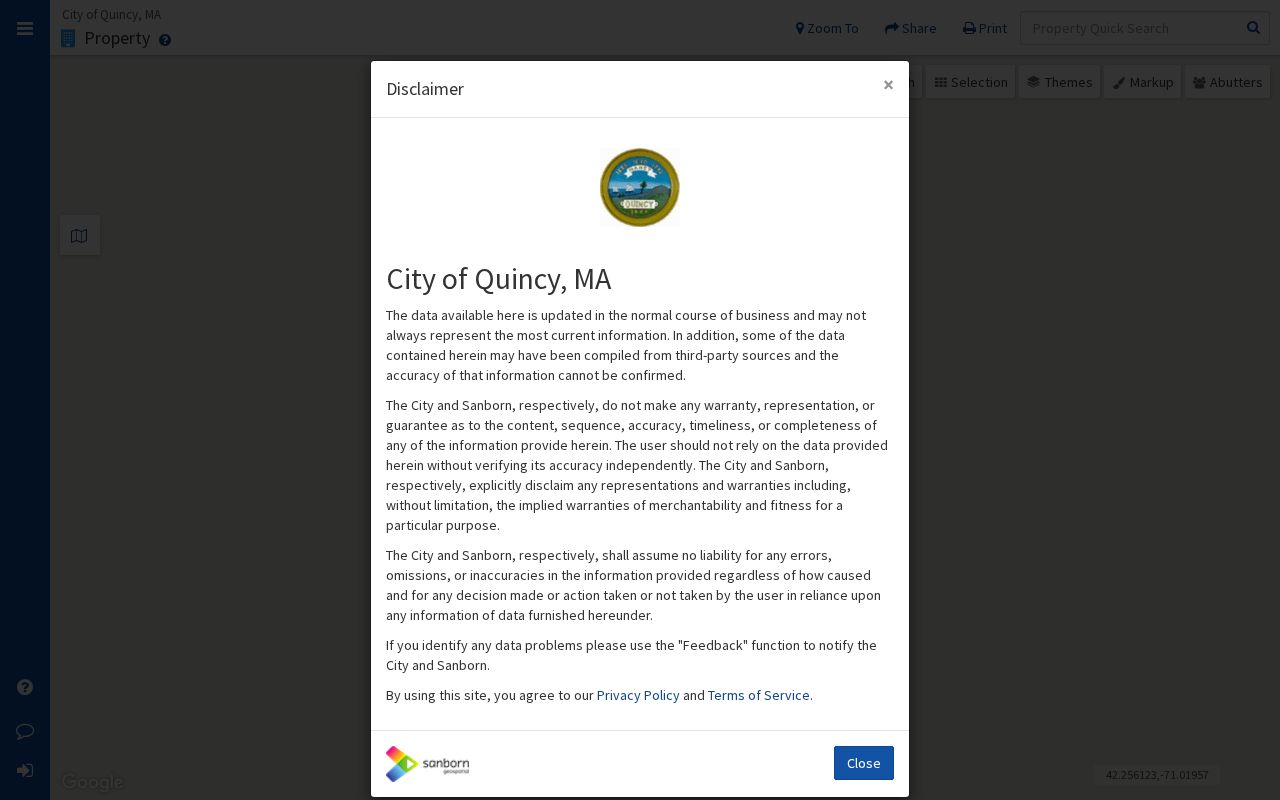
Quincy’s MapGeo property viewer adds the map context a text result cannot provide. Search by address, parcel number, or MBLU, or pan to a block and select a parcel. Its available layers can help distinguish parcel shape, streets, zoning, flood context, and adjoining parcels. The map is useful for a Quincy resident record question that starts with one address, especially where a corner lot, condominium layout, or nearby parcel could otherwise be confused.
A map selection still needs a record check. Note the selected parcel identifier, then open its assessor card and follow its deed reference. MassGIS also documents adjacent-parcel highlighting and measurement tools. The map describes location and relationship; the deed’s legal description remains the stronger test when a visual boundary and a title record seem to diverge.
Quincy MapGeo’s parcel dataset supplies the street-level map view.
Quincy Registry Name Chains
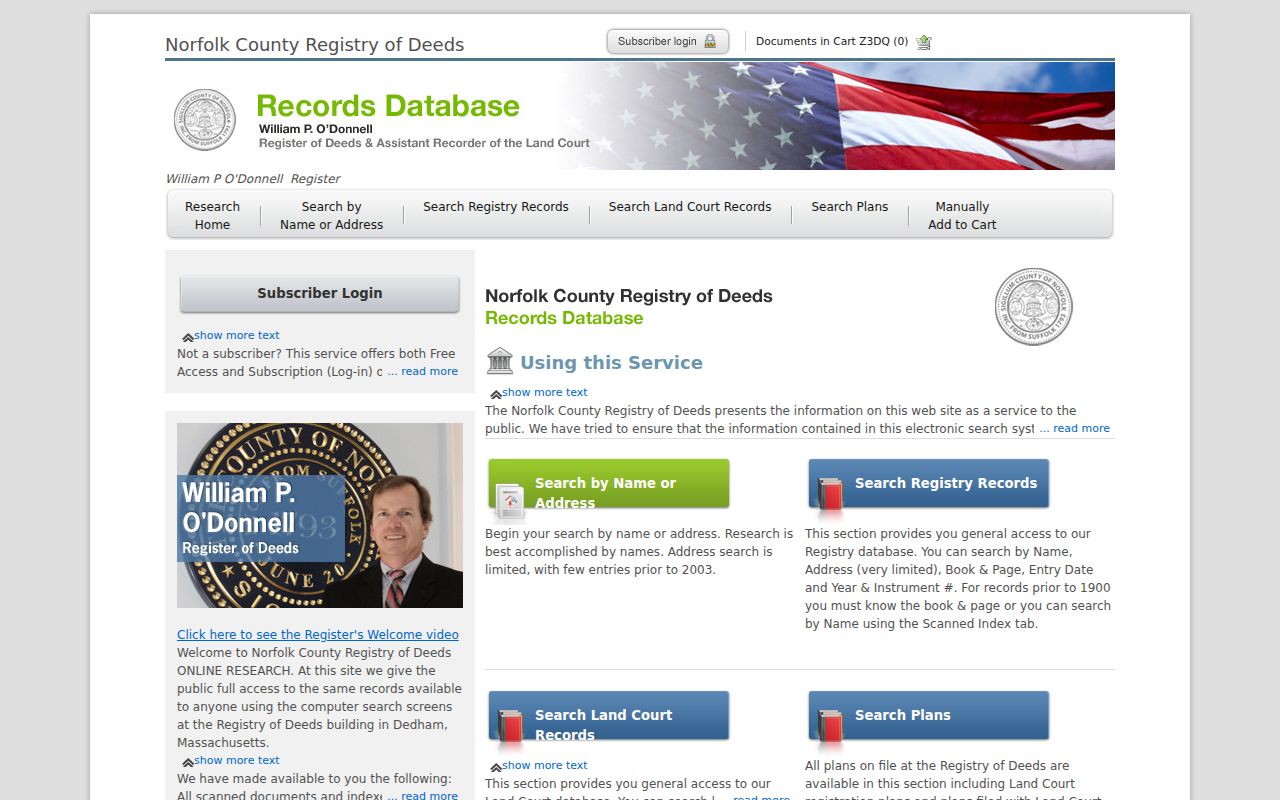
The Norfolk Registry’s public research system reaches back to 1793 for recorded land, with scanned grantor and grantee index pages from 1793 through 1955. It has separate Recorded Land and Land Court paths. Start with the assessor’s current owner and deed reference, search that owner as grantee, read the grantor and legal description, then search the grantor as the next historical grantee. Before 2003, address searching is limited, so the name and book-and-page method is usually more dependable than repeating an old street string.
Free access permits viewing and printing images marked “Not An Official Copy.” The Registry offers counter and mail copy routes when a certified or regular copy is needed. A title question may require the physical certificate because the online Land Court owner listing is described as unverified. This is a records trail, not an occupancy roll: title, mailing address, and household presence are separate facts.
The Norfolk Registry research system presents Registry, Land Court, plan, and search choices.
Quincy Voter Lookup Limits
The Massachusetts voter-status form is a confirmation tool for one person, not a Quincy residents directory by street. It requires first name, last name, date of birth, a five-digit residential ZIP, and an agreement checkbox. Massachusetts General Laws c. 51, § 47C restricts the central registry’s names and addresses, so an ordinary search cannot turn the form into a list of everyone registered on a block. Protected registrations may also be masked.
For older resident work, Thomas Crane and state collections hold dated adult-inhabitant, voting, and resident lists. Those volumes can establish that an adult appeared at an address in their publication year, but they do not identify every person in a home. Treat a voter-status match and a historical list as different kinds of evidence.
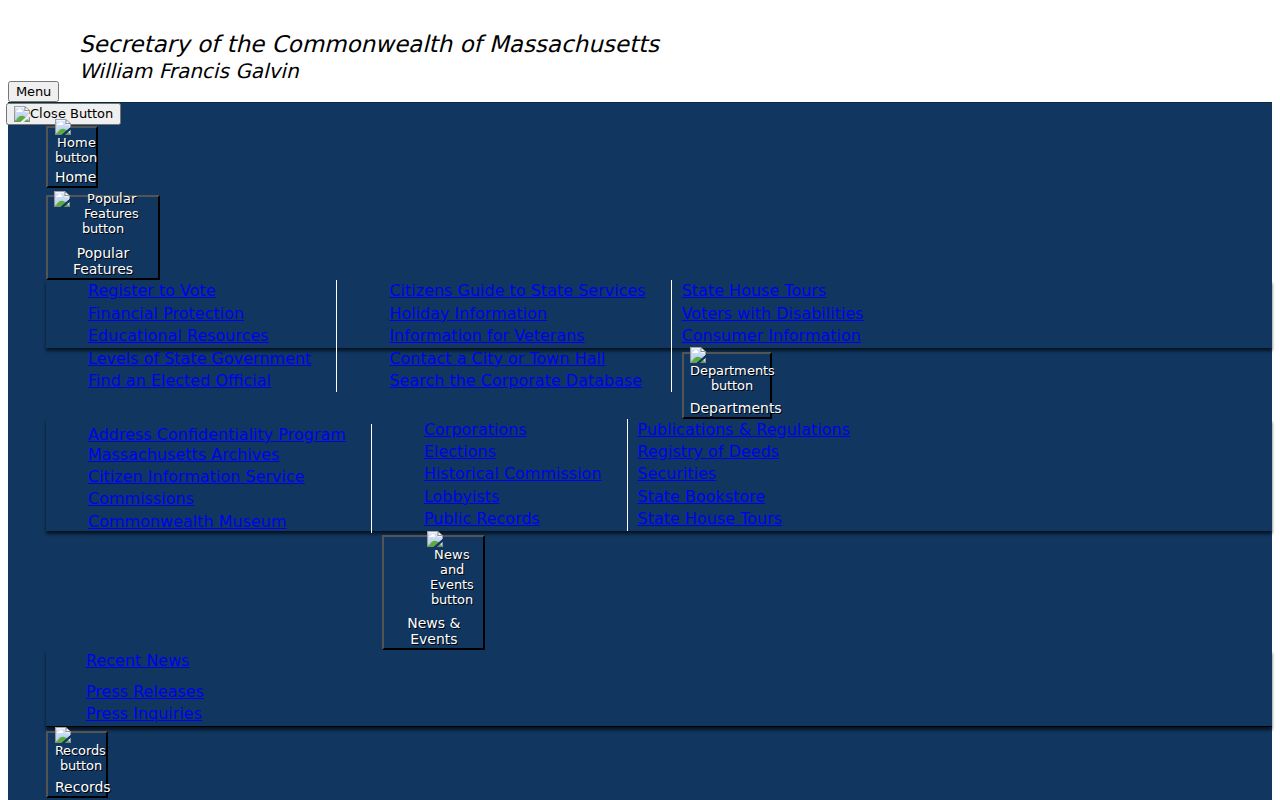
Massachusetts voter registration status shows the exact matching fields.
Current Quincy Resident Directories
No official source is a complete current Quincy resident list. The practical directory layer is made of source-specific indexes. The assessor shows an assessed owner and parcel. The Registry lists parties to recorded instruments. The voter form can confirm one supplied identity. Public court dockets show public case information subject to sealing and impoundment. Community associations offer contacts and events, but no verified public membership roster was found. Use the source whose scope matches the question.
| Quincy directory source | What it identifies | Custodian | Access route |
|---|---|---|---|
| Assessor parcel card | Assessed owner, situs, tax mailing field, parcel traits | Quincy Assessors | Free VGSI and MapGeo search |
| Land-record index | Grantors, grantees, instruments, legal descriptions | Norfolk Registry | Free research system and counter |
| Voter status | One supplied registration match | Secretary of the Commonwealth | Name, DOB, and residential ZIP |
| Public court docket | Parties, case events, disposition as available | Massachusetts Trial Court | Portal, clerk, and public kiosk |
| Local history collections | Dated household, newspaper, yearbook, and obituary leads | Thomas Crane Public Library | In-library and appointment routes |
When the aim is to verify one person rather than explore a parcel, compare two independent records and keep the access limits in view. A narrower name-led lookup uses that same two-source check.
Quincy Court Record Leads
MassCourts gives a public starting point for Quincy District Court, Norfolk Probate and Family Court, Norfolk Superior Court, the Quincy Session of Juvenile Court, and other Trial Court matters serving Quincy. Court records can help distinguish people with a shared name through a case number, party role, event date, or court location. The portal does not replace the clerk’s file. Sealed, impounded, juvenile, adoption, and other protected material is excluded or limited, and a public kiosk or counter may be the appropriate fallback for a public record not visible online.
A docket is an index of case activity. It can show parties, case type, events, and disposition, but the underlying image or certified document may require a clerk request. Confirm any name match with an address-era record such as a deed, directory, or lawful vital-record route.
Massachusetts Trial Court Case Access is the public court-search entry point.
Quincy Vital Record Routes
For a birth, marriage, or death registered in Quincy, begin by asking the Quincy City Clerk or local registrar whether it holds the event and what identification or relationship proof is required. Massachusetts RVRS offers statewide certified copies, while the State Archives holds genealogical records from 1841 through 1935. RVRS covers 1936 to the present and says it has no public online index. The right route depends on whether the need is a certified legal copy or historical research.
Massachusetts General Laws c. 46 governs access. Birth and marriage records older than 90 years, and death records older than 50 years, are outside the ordinary confidential-period restriction. More recent certified copies have relationship, tangible-interest, judicial-order, or official-duty rules. RVRS lists counter, mail, online, and phone channels, with different charges and processing times.
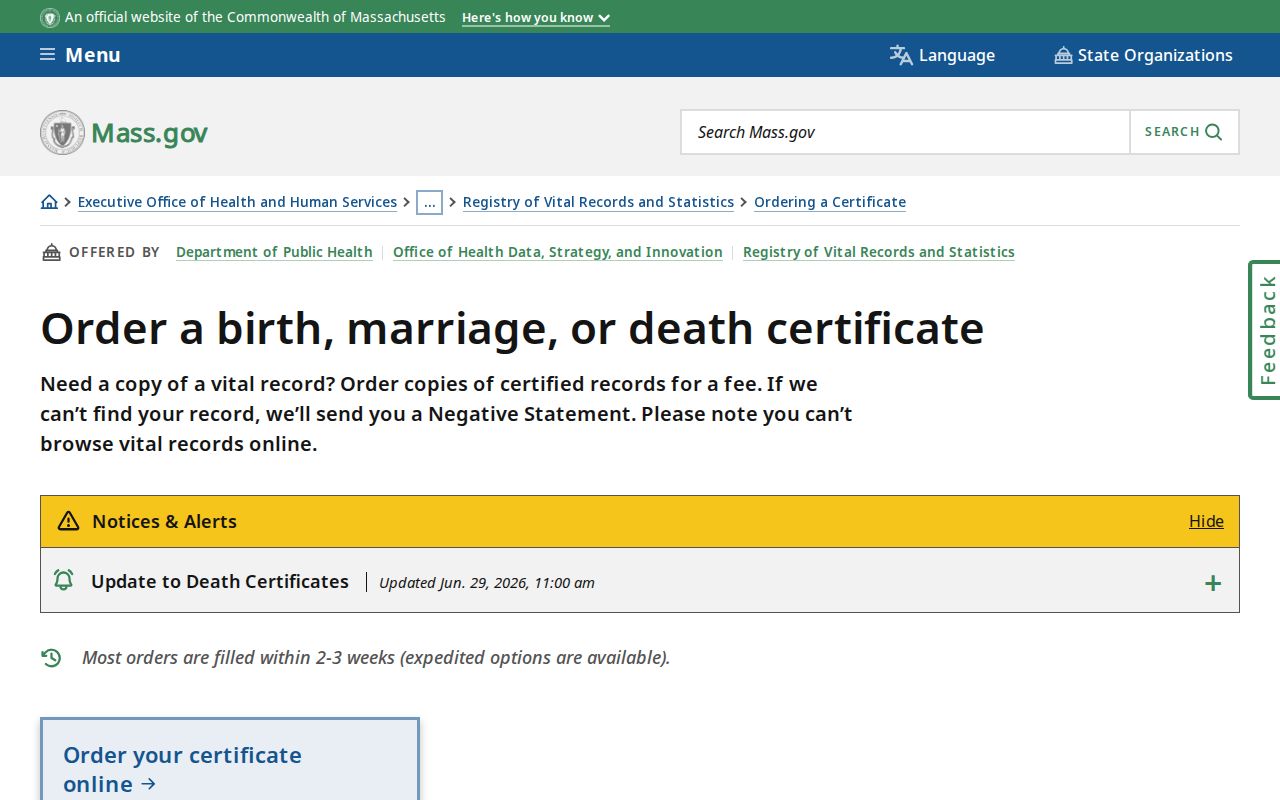
Massachusetts vital-record ordering guidance explains the available request channels.
Quincy ZIP Record Context
Quincy’s primary ZIP codes are 02169, 02170, and 02171. They are delivery areas, not neighborhood or city-limit lines. USPS should verify an exact address, while MapGeo and the assessor help locate the parcel. A city directory may instead use an older street form, a ward, or neighborhood wording such as Quincy Centre, Houghs Neck, or Squantum. Preserve both the published place label and the modern postal result instead of forcing one into the other.
The assessor viewer does not expose a ZIP-wide export in the accessible search screen. For a grouped research task, validate each address through USPS, then work the resulting parcel set. The voter-status form accepts a ZIP only as one field for a named person and does not provide a ZIP-wide voter list. More detailed postal geography appears in the Quincy ZIP code directory.
Note: A Quincy-area data set can include nearby Braintree, Milton, or Weymouth ZIPs, so postal proximity alone does not establish a Quincy parcel.
Quincy Library Resident Archives
Thomas Crane Public Library’s Archives & Special Collections is the principal local fallback once a live index ends. Its Quincy Room materials are in the Richardson Building and are available for in-library use. Special collections are closed stacks and appointment-only; staff hold a photo ID during use, allow photos subject to copyright, and decide copying case by case. Research assistance and obituary requests are available by email or telephone. The library’s databases also include local newspapers, genealogy services, yearbooks, directories, voting lists, and photographs.
- Roll
- A source-specific list, such as a voter or assessment roll, with its own inclusion rules.
- Index
- A finding tool that points to a record, not necessarily the record image or a complete history.
- Parcel
- A defined piece of land in the assessor and map systems, commonly identified by MBLU or PID.
- Criss-cross directory
- A reverse or house-guide section that moves from street and number to a listed householder.
The library’s Patriot Ledger resources reach from microfilm beginning in 1837 to current holdings, and digitized Quincy titles include the Quincy Patriot, Quincy Monitor, and Quincy Daily Ledger. Those dated materials are especially useful for a move, death, business affiliation, or spelling change that a parcel card cannot explain.
Quincy Official Directory Choices
Official and institutional records are slower than a commercial data-broker compilation, but they show what a custodian actually maintains and provide a source date. A private compilation can merge people with similar names, retain stale address fragments, or attach an inferred association without explaining where it came from. For a Quincy residents directory search, the safer comparison is not “fast versus slow.” It is an unaudited assertion versus a record that states its keeper, scope, and limitations.
| Source type | Strength | Limit to keep visible |
|---|---|---|
| Assessor and Registry | Direct parcel and recorded-title evidence | Does not enumerate every household member. |
| Library directories and newspapers | Dated household and community context | May omit people and have coverage gaps. |
| Court or vital record route | Defined event or case evidence | Access is subject to legal exclusions and eligibility. |
| Commercial data-broker category | May surface a lead to test | Can be stale, merged, and unaudited. |
Massachusetts provides a records-request path in M.G.L. c. 66, § 10 for existing public records. A request should identify the custodian, record type, date range, and form of delivery. It cannot require an office to create a new current-resident list or release protected material.
Historical Quincy Resident Directories
Quincy’s printed directory and resident-list record is unusually deep. Identified collections include Gibson and Morrison volumes from 1855 through 1866, Root’s series from 1868 through 1874, later city-directory runs, adult-inhabitant and voting lists, and selected house-guide directories. The State Library, Thomas Crane, catalog partners, and historical sources each contribute part of the sequence. A missing year is a collection gap, not proof that a person left Quincy.
Read the title page and abbreviation key for each volume. Alphabetical entries can carry a name, residence, trade or business context, spouse notation, or a separate business address. The reverse section may lead from a street number to a listed householder. Pair nearby directory years with census schedules, deeds, obituaries, and probate records to avoid assuming continuity. The full collection and shelf workflow is on the Quincy city directory page.
Quincy Resident Record Gaps
Several gaps matter because they change the right fallback. Research did not identify a verified public Quincy cemetery-interment database, an unauthenticated public city permit or code-case search, a public Norfolk County jail roster, or a confirmed citywide Quincy renumbering year. The absence of a public interface does not mean the underlying record never existed. It means the next step should be a narrow request, a counter visit, or an archival inquiry rather than an invented online search.
For a non-indexed city record, ask the relevant custodian for a record type and address or date range. For older house history, combine the assessor card, MapGeo geometry, Registry and Land Court record, directory or house guide, Sanborn map, and newspaper or probate lead. That layered Quincy trail preserves uncertainty where the source does not provide an answer.
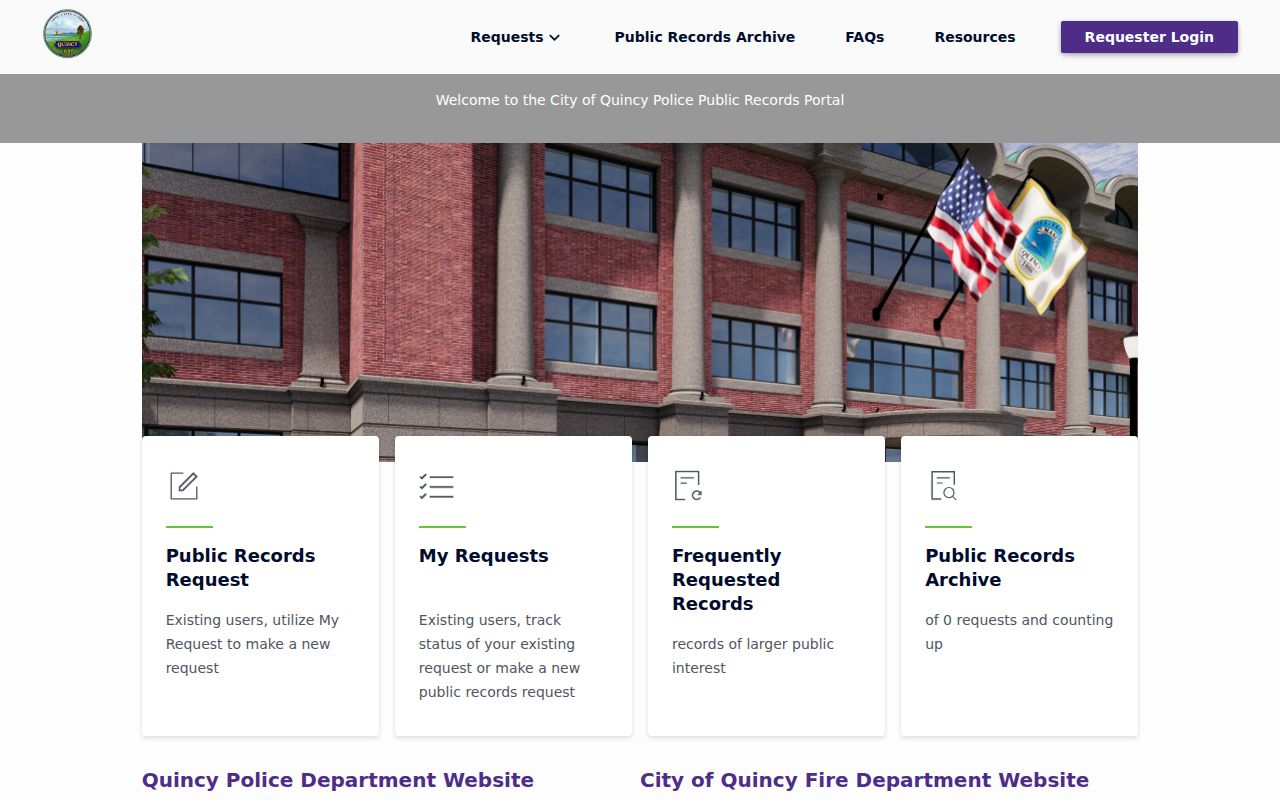
Quincy Police’s public-records portal illustrates the city’s request-and-tracking route for an existing record.
For records held by another custodian, direct the request to that office and include the source details already located.
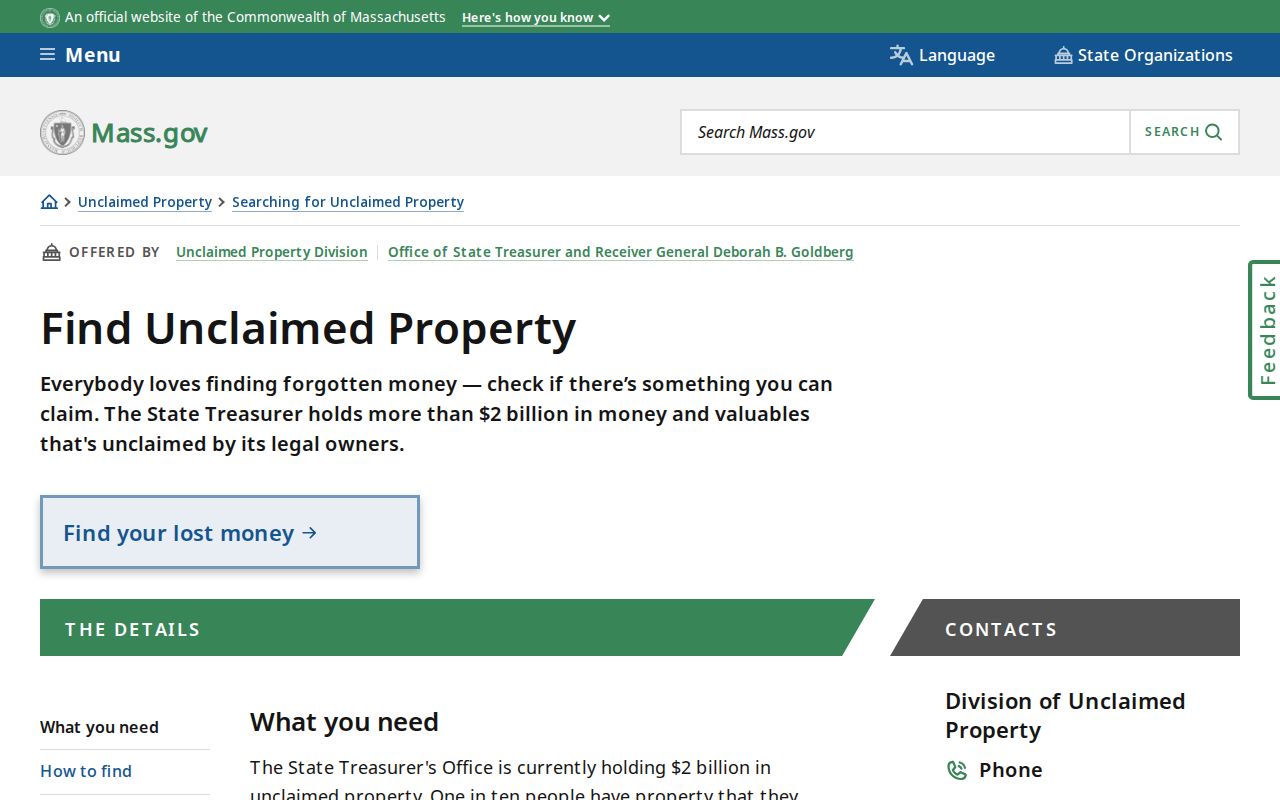
Massachusetts unclaimed-property search guidance is a name-and-address route that may supply a former-address or heir lead.
When a government result does not include a date or source detail, preserve the uncertainty instead of joining it to a Quincy household.
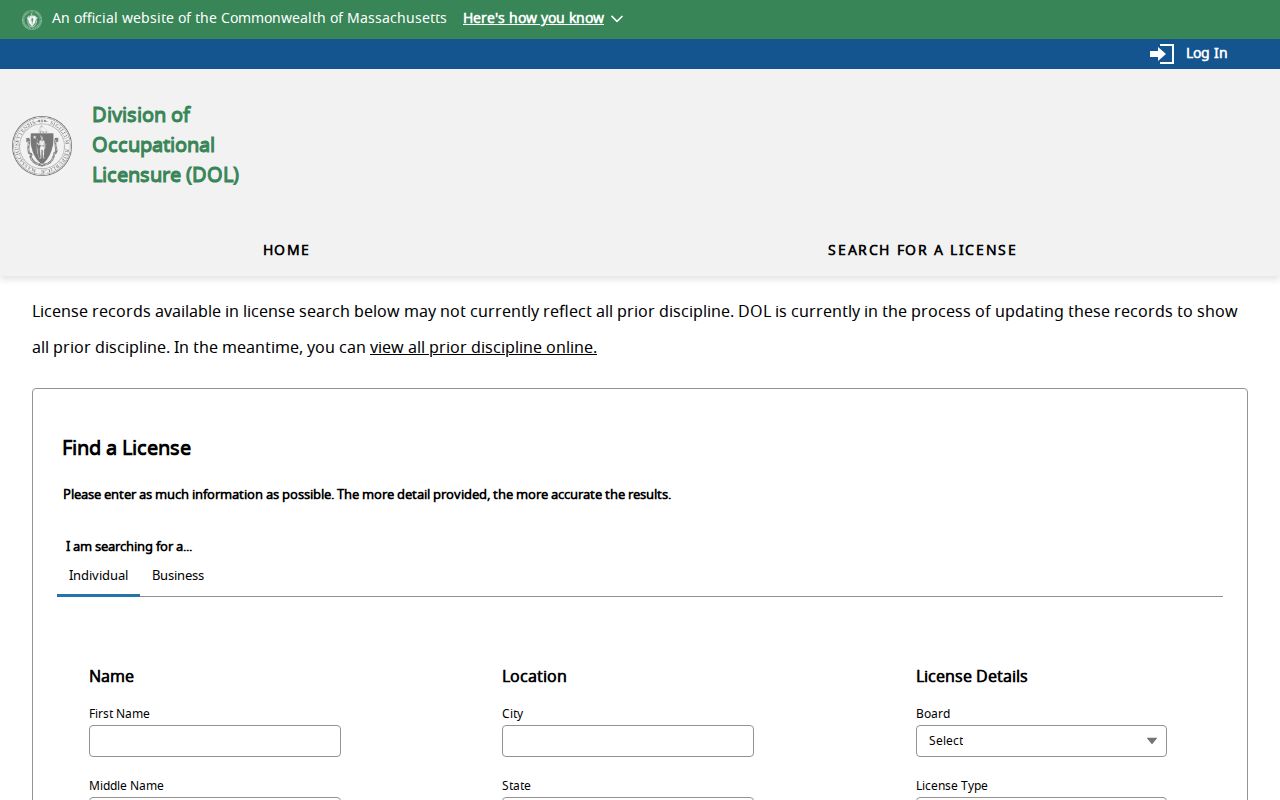
Massachusetts license search offers name, city, state, ZIP, board, type, and number fields.